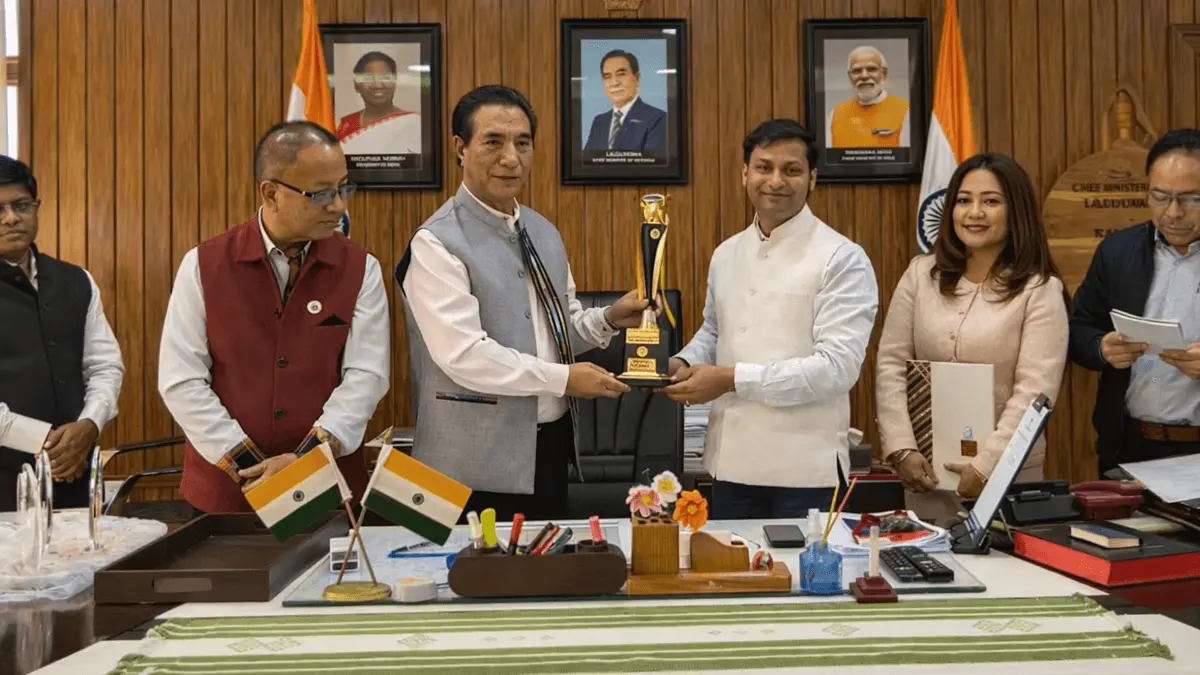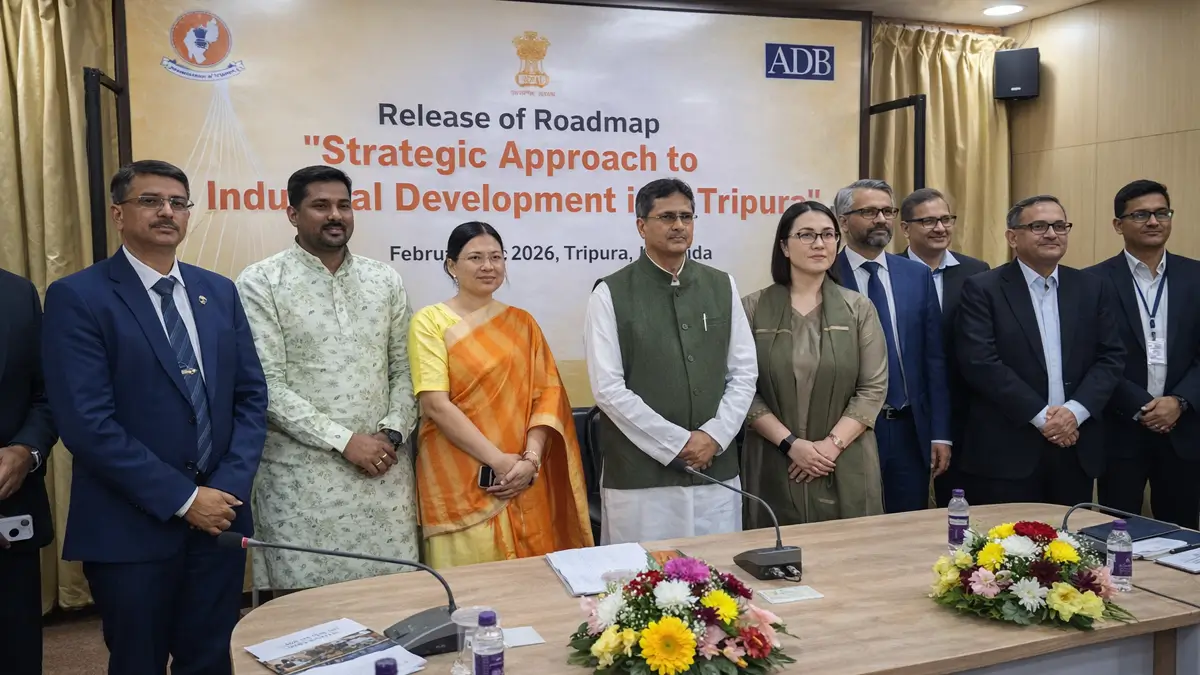

Tripura Industrial Development Strategy, Tripura has taken a decisive step toward industrial transformation. The Hon’ble Chief Minister Dr. Manik Saha released the publication “Strategic Approach to Industrial Development in Tripura” in Agartala. The event marked a new chapter in the state’s economic journey.
He was joined by Industries and Commerce Minister Santana Chakma. In addition, Mio Oka, India Country Director of the Asian Development Bank, attended the release. Their presence underlined the importance of the initiative.
A Clear Roadmap for Industrial Growth | Tripura Industrial Development Strategy
The report provides a roadmap for the development of industries. It highlights the sectors that need to be given priority. In addition, it provides targets that need to be achieved. Furthermore, it provides recommendations for policy changes to attract investments. The report also emphasizes the need for long-term planning.
The report states that Tripura has great potential in agro-based industries, bamboo products, and rubber goods. However, industrial development has been slow. Therefore, the roadmap aims to fill the gaps in infrastructure. It also aims to eliminate obstacles that hinder development.
In addition, the roadmap emphasizes the need for sustainable development. It promotes environmentally friendly industries and the use of resources. Consequently, economic development can proceed without harming the environment.
Strengthening MSMEs and Local Enterprises | Tripura Industrial Development Strategy
Micro, Small, and Medium Enterprises play a vital role in Tripura’s economy. They generate jobs and support rural livelihoods. Therefore, the new strategy gives special attention to MSMEs.
The government plans to simplify registration and approval processes. In addition, financial support schemes will help entrepreneurs expand operations. Skill development programs will also strengthen local talent. Consequently, small businesses can compete more effectively.
Moreover, the state aims to create industrial clusters. These clusters will improve collaboration and reduce costs. As industries grow together, productivity will increase.
Infrastructure as the Foundation
Industrial development requires robust infrastructure. Hence, the strategy focuses on improved road and logistics infrastructure. It also underlines the importance of a stable power supply.
Digital connectivity is another important area of focus. Contemporary industries require efficient and secure communication networks. Therefore, the state will improve digital infrastructure. This will establish a favorable business environment.
Furthermore, industrial estates and shared facility centers will be given top priority. This will minimize costs of doing business for investors. With improved infrastructure, investors’ confidence will increase.
Skill Development and Employment
Industrial expansion must create employment opportunities. Therefore, skill development stands at the center of the strategy. Educational institutions will collaborate with industry partners. This approach ensures that training matches market needs.
Vocational courses will focus on practical skills. Moreover, youth will gain exposure to emerging technologies. As a result, the workforce will become more competitive.
The government expects that new industries will generate thousands of jobs. Consequently, household incomes will improve. Economic activity across districts will also increase.
ADB’s Role and Global Expertise
The involvement of the Asian Development Bank adds strength to the initiative. ADB has supported infrastructure and policy reforms in many states. Therefore, its guidance brings international best practices to Tripura.
Mio Oka emphasized sustainable and inclusive growth. She highlighted the importance of coordinated planning. Moreover, she noted that global expertise can accelerate implementation.
The partnership ensures technical support and structured evaluation. As progress is reviewed regularly, adjustments can be made when required.
Investment Promotion and Trade Potential
Tripura’s strategic location offers unique advantages. The state shares an international border with Bangladesh. Therefore, cross-border trade can boost industrial expansion. Improved connectivity will open new markets.
The government plans investor outreach programs. It will highlight opportunities in key sectors. For instance, agro-processing and rubber-based industries show strong promise. By promoting these sectors, the state can attract domestic and foreign investment.
Additionally, policy transparency will strengthen investor confidence. Clear guidelines reduce uncertainty. As a result, businesses can plan long-term operations.
Commitment from State Leadership
Chief Minister Dr. Manik Saha emphasized the need for joint actions. He urged everyone to participate actively. In addition, he mentioned the need for accountability and transparency. He believed that monitoring would lead to success.
Minister Santana Chakma reiterated the commitment of the government to ease of doing business. She said that the reforms would continue. Thus, investors can look forward to a favorable environment.
The release ceremony in Agartala represented the collective commitment. There was a common goal among the leaders and officials.
Looking Ahead | Tripura Industrial Development Strategy
Tripura is at a very promising juncture. The state has natural resources and a young population. But the key to success will be implementation. Hence, the partnership between the public and private sectors is still the need of the hour.
Conclusion:
The “Strategic Approach to Industrial Development in Tripura” document is a great starting point. It ensures sustainable development, investment, and employment. Furthermore, it also meets the country’s development objectives.
With strong leadership and institutional support, Tripura is set to become a vibrant industrial destination in Northeast India. The process has started. Now, it is time to make Tripura’s industrial future.